I returned to Anne of Green Gables thirty-six years after I had first read Ania z Zielonego Wzgórza in Polish as a little girl. This time, in August 2023, I read the original English version during my first ever visit to Canada and my sentimental trip to Prince Edward Island. This essay reflects on my childhood love of Ania and my new understanding of Anne and Maud.
Dedicated to those for whom Ania became a kindred spirit
In Ania’s Footsteps
L.M. Montgomery’s Canadian “Anne” is translated to “Ania” in Polish, and my real journey with her began in the late 1980s, the moment when I received my first copy of Ania z Zielonego Wzgórza [Anne of Green Gables]. The book was a gift from my grandmother, who bought it from a little bookshop on her street. At that time, the novel was already widely known and extremely popular in Poland, so I was the third generation of women in my family to read it. Every year, Polish students thoroughly study a dozen or so books with a Polish-language teacher, and one of the books they often study is Ania. However, my childhood reading of the Polish translation of Montgomery’s novel started a journey that I didn’t finish until 2023.
Ania became a friend of many teenage and younger girls in our youth, and for each of us for individual reasons; in my case, it was because I found many similarities in the book to my own life and experiences. At the moment of reading the novel for the first time, those similarities were important to me, even though I shared them with a fictional character and only in my own mind. Both Ania and I were girls of the same age and both without siblings, therefore spending a significant amount of time with adults. In my situation because of the nature of my parents’ work, I was sent to my grandparents’ over the holidays, and after the sudden death of my grandpa, to my grandma.1 With my parents, I used to live in a big industrial city (we would call it a concrete jungle today), but my grandparents’ neighbourhood was different: very green, with plenty of parks, many private flower gardens, and a very special community.
The origins of my grandparents’ home place and its community were strongly related to the war. After the Second World War, buildings in which troops had previously been stationed remained empty in this part of the city, and the government later made them available to Polish working-class families. Because people there knew each other since the war, they helped one another and established a small and well-integrated community, similar to Avonlea. Both my mother and I were born there, and, therefore, I always had a feeling of belonging to it, although I lived permanently with my parents in another part of the city.
Like my fictional friend from the book, I dreamt of having a real friend, and I felt especially lonely during the two-months-long summer holidays. There were not many children my age in my grandma’s neighbourhood, and my two good comrades I had while on holidays there visited their relatives only occasionally and briefly. I easily associated that area with Green Gables; I was not pretending that it was Green Gables but was creating my own favourite places and using the existing names. What is important here is that all the names of the streets and parks in that particular area of my city were borrowed from names related to nature, wildlife, and Polish mountain regions. For example, the entire region was called Stoki (a sloping landform), and the street where Grandma lived was called Pieniny (a mountain range in Poland). I spent much of my time playing by myself, talking to older members of that little community, and just observing nature and wandering around.
For me, all that beautiful scenery was as magical as the places described by Montgomery in her stories about Ania. I had my favourite bushes, chestnut trees, island on the pond in the nearby park, and many beautiful flowers. Ania was a soulmate to me, with similar interests, although there were differences between us—I was always happy with my hair colour, and I did not get into trouble as much as Ania did. My fascination with Ania’s adventures was intense, so I encouraged my family to buy me the other books in the series. I also wanted to locate Prince Edward Island; at that time, I knew nothing about Canada, and I had never heard of any person who had visited it. My beloved grandma bought me a little globe from the same corner shop where she had purchased my Ania z Zielonego Wzgórza. That was the beginning of my long journey with Ania. Ania was never absent from me for long, especially since Polish television kept reminding viewers about Green Gables, particularly when various films based on the novel began to be broadcast. That included a four-part Canadian series about Ania by Kevin Sullivan from 1985 to 2008.
Ania as a Kindred Spirit
Ania delights many people, both children and adults, and people of different backgrounds, nationalities, and life experiences. The character is so special that she allows many people to find what they are looking for, whether beautiful childhood memories, beloved landscapes, a true friend, or just dreams. I still remember that when I was a little girl, I wanted to be like her, following my own path and views and always being honest with myself and my beliefs. I wanted to find a true friend like Ania’s Diana and be surrounded by stunning views of the countryside like their Prince Edward Island landscapes. Life for most Polish citizens at that time was not easy: we could not travel outside the Eastern Bloc, and my parents’ generation was starting life from zero, usually having nothing, most often not owning property, especially in cities. Many Polish people were extremely poor at the time, still fighting postwar shortfalls and living life under the influence of the Soviet Union. Thus, for many readers, being able to escape into the charming world of Ania was at the same moment a real relief and a pleasure.
Growing Up with Ania
While growing up with Ania through reading the Polish translation by Bersteinowa, I felt a strong connection with the main character. However, thirty-five years later, I now also feel a connection with the author herself. I wonder whether it is because I am an adult now, with my own path and experiences, or maybe because, as with Ania in childhood, I have found so many similarities to Maud in my own adult life. After a visit to Prince Edward Island and reading the information displayed on the walls of Green Gables Heritage Place and Montgomery’s Cavendish National Historic Site, I felt that my original ideas about Maud’s life and fortunes were completely different from reality, and I realized that as a child I had not thought much about her as an author. In childhood, the most important appeal had been the main character, Ania—her feelings, her adventures, and her sorrows and joys. As an adult, I have become more interested in how many of Maud’s own experiences and feelings she gave to various characters, not only Anne but also the much more autobiographical Emily, whom I discovered years later.
As a child, I believed that Ania was solely a product of Maud’s imagination and that Maud probably had a joyful life by the side of her true love, in a relationship like that Anne had with Gilbert in later volumes of the series. Of course, I am aware that all people face sorrows and dilemmas, but, for some reason, I childishly believed that well-known authors must live perfectly happy lives, unlike those of other people.
My Sentimental Journey to Prince Edward Island
Since the moment I first had Ania z Zielonego Wzgórza in my hands, I wanted to visit that magical landscape described so precisely in the novel and that I was painting in my head. It took me nearly forty years to fulfil my dream, and only in summer 2023 was I able to arrange a trip to Canada. Until then, I knew only my own Polish version of the novel, the one from 1984 and translated by Bersteinowa that I still have at home. I did not have specific expectations about my journey, but I was curious whether the vivid pictures of characters and landscapes from the novel that I had created over the years would be reflected in reality.
I was so committed to seeing Green Gables at least for a short time, that after a debate with my husband and daughter we decided to travel from Toronto to Cavendish by car, a sixteen-hour drive. We stayed on the island just for one day, returning to Toronto the following day to catch the flight home to Europe. That whole day in Prince Edward Island was dedicated to Maud and her heritage. What struck me instantly was the journey itself. When I learned that after her move to Ontario, Montgomery often visited her beloved home island, travelling by train, I was absolutely stunned that she made that journey so regularly. We were totally exhausted after two days in a car, and it was clear to me that she must indeed have had a strong connection to her precious island, although I realize that travelling by train is usually more comfortable than by car.
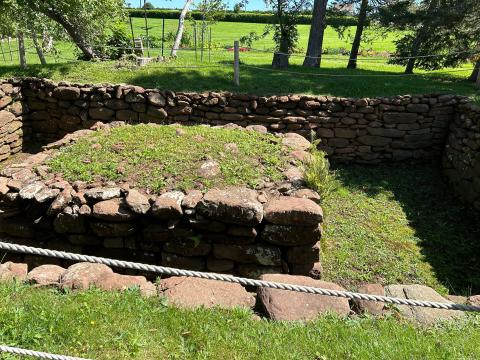
I found today’s Cavendish very close to my imagined ideas from childhood. Having so little time, we decided to visit only places dedicated to Maud—Green Gables Heritage Place and L.M. Montgomery’s Cavendish National Historic Site—and the nearby cemetery where Maud is buried. It was natural for me to choose the area where she grew up with her grandparents, to walk down her favourite paths, and to see her final place of rest. I imagined that the whole of Cavendish was just more rural in her time, with gravel or sand roads and more trees and fields, but perhaps not much different than nowadays.
The most emotional moment for me was seeing the flower garden on the other side of the road, opposite the cemetery, just a few steps away from the remaining foundations of Maud’s house. My grandma, who bought me Ania and the globe, had the same kind of garden and planted the same flowers as I discovered there, such as marigolds, petunias, and nasturtiums.
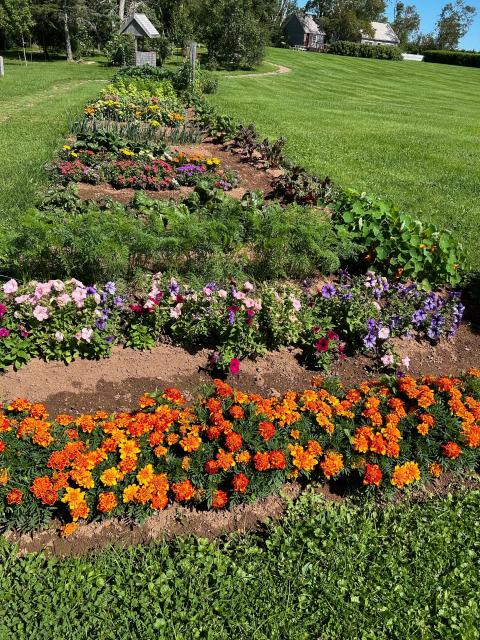
My grandmother passed away thirty years ago, and, unfortunately, the government then repossessed her apartment and the small garden area that belonged to it. The law was complicated in Poland then, and we did not have the right to buy her flat from the city council. I found my experience very similar to Maud’s own experiences, as she, too, was unable to keep her grandparents’ beloved house when her grandmother died and Maud married and moved to Ontario. I remember each piece of furniture from my grandmother’s home as well as each flower she planted and tended. Since my grandma passed away, I have never come across these particular flowers in anybody’s garden or private estate until I saw them all in the little garden of Montgomery’s Cavendish home. It was so touching for me. I was so moved to see each one of the flowers that I had tears in my eyes.
Longing for …
Today I mostly think about and interpret Montgomery’s work through her private experiences that I discovered during my research after returning home from Canada. I spent several months reading articles and websites dedicated to her life and work and her own journals, which were all excellent sources of information and answered many of my questions. Although Ontario and Prince Edward Island are in the same country, the distance between them is as significant as if they are in different countries, at least from a European perspective.
Before I started my own family, I used to write for newspapers and magazines. I enjoyed that experience, but later the uncertainties associated with the everyday life of a freelance journalist—balancing writing time and family time and distractions while working from home— led me to redirect my career to teaching, so most of my time I spent in various schools and did not have as much time for writing as I would have loved to have. I also had to leave my beloved place, friends, and family to join my husband in his new workplace outside Poland. Missing what brought me joy, fulfilment, and inspiration is, I think, the most difficult part, and I fully share Maud’s feelings of loss. Hence, visiting her dearest place and seeing also my own childhood flashbacks through the flowers and my memories of reading the novel gave me a completely new experience.
A Timeless Portrait of a Woman
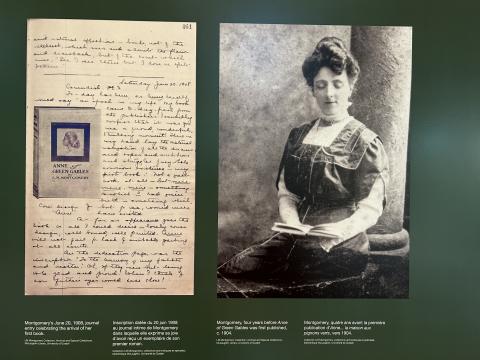
Delving into Maud’s professional and personal life as a mature woman, I could not help feeling how timeless the dilemmas of women are. Although 150 years have passed since Maud’s birth, in many places around the world women are still fighting for their rights, must abandon their dreams more often than men do, and have less time for their passions, often being forced to choose rationality and pragmatism over the call of the soul and heart. As I became more familiar with Maud’s personal life, I noticed how similar her feelings were to my own and to those of many of my female friends and relatives and to many women around the world, no matter their material or social status, origin, age, and experiences. Not long ago, I had the opportunity to participate in some personal development training, a kind of short retreat for women. Each participant talked about the same topics: choices that influenced their entire lives, the threat of war; the COVID pandemic; dreams they had to squeeze between the everyday demands of life, childcare, disappointment with their personal life (lack of love, difficult relationships); and other issues that were beyond their control. Maud describes all of these in her journals and in her fiction, albeit often indirectly. I see her as many do: a very vulnerable yet strong woman who, despite misfortunes and setbacks, pursued the path she chose for herself. We cannot forget her worries about the fate of the world, the Great War raging in Europe, the 1918 to 1920 flu pandemic, her love life, religious dilemmas, and longing for her beloved island, all followed by the shadow of another war at the end of her life. All these worries keep her close to many people, especially to women.
The Novel Then and Now
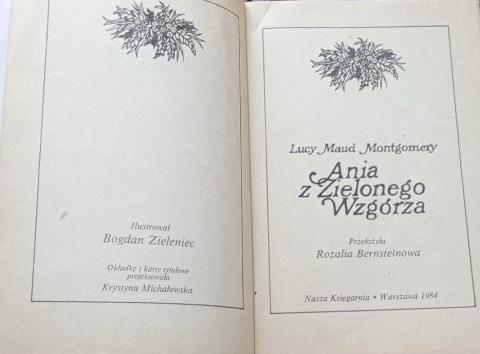
It is difficult to compare the two versions of Anne of Green Gables I own, the one from the early 1980s in Polish published by Nasza Księgarnia and my new limited-edition English copy—the one that looks most like the original first edition, published by Kindred Spirits Publishing—that I bought in July 2023 at the Cavendish National Historic Site. Cavendish’s Green Gables Heritage Place surprised me in many ways in how I came to see the novel. First, I was completely unaware that Polish visitors are among the most frequent nationalities visiting the site, but this is the case according to the museum guides to whom I spoke. Second, it was a real pleasure to see the Polish novel on display in the museum, most probably because the translation into Polish (1911), was the second one after Swedish (1909), many years ahead of other countries around the globe. Until the 1990s, only the original first translation existed in Poland, then new ones gradually appeared, and now there are a dozen of them in total, the most recent one appearing in 2022. This shows how cherished the book is, even now after more than a hundred years.
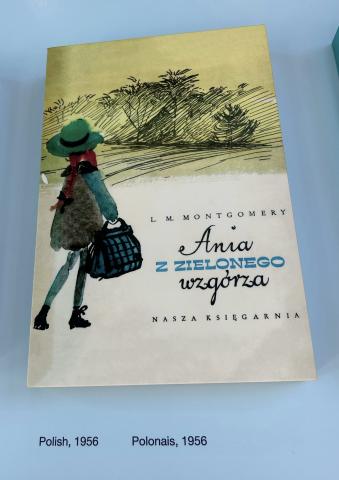
When I flip through the pages of both books, it is impossible not to notice some differences between my old Polish and new English versions; however, I thought about those differences only after reading an article by a Polish scholar, Joanna Lipiński, that was published in 2023 in the Journal of L.M. Montgomery Studies. My Polish book dates back to 1984, and it is a literary translation that identifies Rozalia Bersteinowa as the translator. Lipiński mentions the differences in characters’ names, which I noticed only after reading her article. Although indeed we can observe those changes in proper names of people, places, food, and so on, and there is some loss of cultural authenticity, this did not affect my own personal enjoyment of the novel. As a child, I did not know much about Canada and did not pay attention to the cultural aspects of my reading. The key information was that little girl, Ania, her feelings, and her inner world. My feelings were much like those of other readers from around the world: gratitude that I had the chance to meet the extraordinary little girl who had a talent for speaking and describing the beautiful world around her. Even though I have discovered more above-mentioned details (such as common names, different choice of words for various descriptions) through the original language of the author, I do not regret that I could not read the original novel earlier.
My Own Thoughts on the Journey through My Life and the Novel
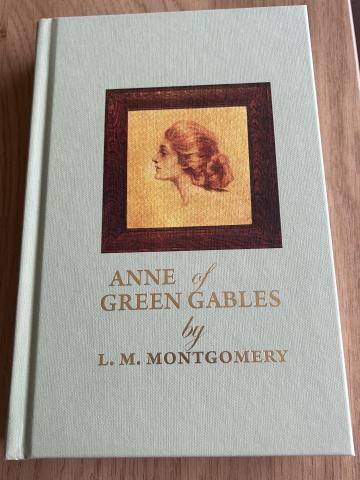
I have followed Maud’s journey to its end, through her books and journals to her final place of rest, and recently we have celebrated her 150th birthday. My close relationship with Montgomery has gone through different stages, just as a person’s life transforms with growing up, changing views and surroundings, and many other matters that shape us as people. When I first became friends with Ania as a fictional character, I was fascinated only by her and her adventures. After visiting the island, I began to perceive her fate differently; I was looking for shared experiences and character traits of the author herself. Finally, taking a closer look at all of Maud's work, reading her diaries, thoughts, interpretations of her works presented at the Green Gables Heritage Place, and visiting Prince Edward Island, I paid special attention to her own life and the similarities that I noticed with mine. As I mentioned earlier when I compared the first Polish translation with the original English version purchased during my stay on the island, the original names of places, dishes, and various proper names did not have much significance for my final reception of the novel—they were simply linguistic curiosities for me. To me, Ania is still the same red-haired girl who may have a slightly changed name and eats something different in our Polish version, but she is just as charming. Montgomery created a character who is timeless, functions well in all temporal and cultural realities, and has no boundaries or limitations, just like the imagination of her author and of Ania.
I used the name Ania here on purpose because even though I have spent half of my life abroad, I still think in Polish, and my childhood memories are associated with the Polish translation of Ania and her name. Perhaps that is why, although Montgomery’s earthly journey has long since ended, Ania and Anne accompany new generations and never seem to get old. By finally making my own journey to Montgomery’s beloved home and final resting place, I had the opportunity not only to take a closer look at her life, and to look at her work differently, but also to reflect on my own journey as a woman, mother, wife, and author.
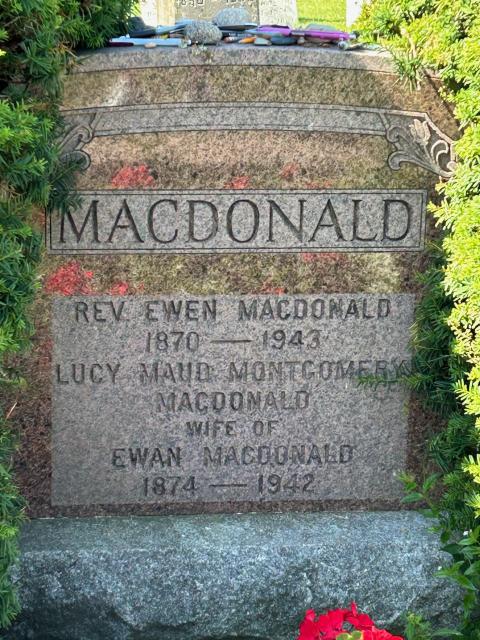
For me, the end of the journey, which is also the title of this piece of work, simply means the end of my own journey with Ania and Montgomery, from the moment I read this book as a child to the moment I visited her beloved birthplace and eternal resting place. It is, therefore, a symbolic end, as if the three of us had very often travelled a common path, shared similarities in many places and moments of our lives, but with the difference that we already know two endings, while my own is still being written.
Bio:
Dagmara Wojciechowska is an educator and freelance journalist. She was born in Łódź, Poland, and currently resides in Belgium.
Acknowledgements:
I would like to express my deepest appreciation to Dr. Holly Pike for her valuable editorial advice, suggestions, and guidance, not to mention her gift of reading my mind, to Dr. Lesley Clement for insightful observations and final touches, and to Jane Ledwell for her meticulous editing and guidance in the publication process.
- 1 My parents did not have as much holiday time as I did. I was still going away with them for two weeks’ holiday in summer and one week in winter, but plenty of days remained, with my parents both working twelve-hour shifts, so I was sent to grandparents then. We had a lot of holidays during a year, including Christmas, Carnival break, Easter, and two months over the summer.
Works Cited
Lipiński, Joanna. “Pat, Anne, and Other Montgomery Characters in the Polish Kitchen.” Journal of Montgomery Studies, 2 Aug. 2023. doi.org/10.32393/jlmms/2023.0005.
Montgomery, L.M. Ania z Zielonego Wzgórza, translated by R. Bersteinowa, Nasza Księgarnia, 1984.
---. Anne of Green Gables. 1908. Kindred Spirits Publishing, 2023.
Banner image: “Dreaming with Anne,” by Michalina Wojciechowska, 2024, private collection of the author.
Article Info
 Copyright: Dagmara Wojciechowska, 2026. This work is licensed under a Creative Commons Attribution 4.0 International License (Creative Commons BY 4.0), which allows the user to share, copy, and redistribute the material in any medium or format and adapt, remix, transform, and build upon the material for any purpose, even commercially, PROVIDED the Licensor is given attribution in accordance with the terms and conditions of the CC BY 4.0.