L.M. Montgomery’s wistful desire expressed in a 1908 journal entry for “a real garden” speaks to many of the challenges she faced in her early domestic life. By the time Montgomery was born in 1874, gardens had been associated with female labour/domestic space for decades, but her family only valued her labour in response to the production of food, clothing, and clean living spaces. Examining Montgomery’s gardening life, both on and off the page, helps us to better understand the many ways in which she used gardens to define and claim her own home spaces, while offering further insights into the domestic expectations placed on women’s lives in the nineteenth and twentieth centuries.
“One of my dearest wishes is to have a garden—a real garden,” wrote L.M. Montgomery in her journal on 12 January 1908. She then added, “I shall never have my ideal garden—it would require more land and money than I shall likely ever have … but I do hope I shall be able some day to have some sort of a garden where I can at least grow all the flowers I want” (CJ 2: 81). Montgomery’s wistful desire for her “ideal garden” speaks to the varied challenges that Canadian women faced in their domestic lives in the nineteenth and early twentieth centuries. Domestic/female labour has long been associated with the production of food, clothing, and clean living spaces. By the time Montgomery was born in 1874, domestic labour had also come to be associated with the creation of ornamental gardens in Europe.1The initial challenges of North American settlement in the eighteenth and early nineteenth centuries required many Canadian women to use garden spaces in their immediate surroundings for food production rather than solely for aesthetic interest (Boyd 38–39; Martin 46–47). Despite residing in an established Prince Edward Island community in the late nineteenth century, it is clear that the immediate members of Montgomery’s family with whom she lived during her childhood and early adulthood saw her efforts to have an ornamental flower garden as little more than a drain on the family’s resources. Neither Montgomery nor her heroines objected to the expectation that they provide their family members with domestic labour in the form of food, clothing, and clean living spaces. Nevertheless, they also sought the right to use their labour to create ornamental gardens around their dwelling places. These tensions played a crucial role in Montgomery’s early writings, including her journals and letters, her short stories, and the early Anne books, as did her advocacy for the traditional perennial plants that had underpinned British gardens for centuries (Buchan 77–79). Examining Montgomery’s gardening life helps us to better understand the many ways in which she used gardens to define and claim her own home spaces, while offering further insights into the domestic expectations and limitations placed on many Canadian women in the nineteenth and twentieth centuries.
L.M. Montgomery was born in Clifton (now New London), Prince Edward Island, to Hugh Montgomery and Clara Macneill Montgomery on 30 November 1874. After Clara Montgomery passed away in 1876, Hugh Montgomery left his young daughter with her maternal grandparents, Alexander and Lucy Woolner Macneill, at their Cavendish farm. Apart from a year with her father at his new home in Saskatchewan, Montgomery spent the rest of her childhood on the Macneill farm, where she planted her first garden in a sheltered area behind the house (Montgomery, AP 29). As a young adult, she attended Prince of Wales College in Charlottetown before becoming a teacher in the early 1890s while publishing her first poems and stories. This period of her life came to a sudden halt in 1898 when her grandfather passed away unexpectedly. Alexander Macneill’s will, which Montgomery described in her journal as “exceedingly foolish,” specified that his farm would go to his son, John Macneill (CJ 1 [8 April 1898]: 410). It did not, however, provide Montgomery’s grandmother with a life tenancy in the house, as was the custom in rural communities at that time.2 Montgomery persuaded her uncle to allow his mother to remain in her house with Montgomery to look after her, but he retained the right to revoke his permission at any time. The next several years in Montgomery’s life became a complex balancing act, one that she chronicled in her journals and letters and in the plots of the early Anne books. She was responsible for the upkeep of her grandfather’s house as well as caring for her grandmother and any other Macneill family member who came to stay at the family homestead. She had to continually placate John Macneill out of fear that he would evict her and Lucy Macneill from their home. She also spent hours writing and gardening, the parts of her life that sustained her other domestic labours and that she kept largely secret from her immediate family.
L.M. Montgomery’s “ideal garden” was the product of garden visits on Prince Edward Island and the gardens that she read about in the books sent her as Christmas presents by her epistolary friend George Boyd MacMillan.3 Unlike Montgomery’s grandfather and uncle, the families of her cousins Amanda, Penzie, and Alma Macneill had embraced the turn to a more aesthetic approach to land use as their farms matured in the final decades of the nineteenth century. Montgomery often visited these gardens in her adolescence and early adulthood and penned enthusiastic descriptions of them in her journals and letters. One such entry from 1 August 1895 noted that her cousin Amanda’s “old garden, sloping down to the pond, where huge willows droop over the still water, is a charming spot. Gnarled apple trees bend over plots of old-fashioned flowers—thickets of sweet clover, white and fragrant, beds of mint and southernwood, pansies, honeysuckles and blush roses.” (CJ 1: 279). Montgomery’s appreciation for these gardens was twofold. They were beloved places from her childhood where, as she noted, “time seems to stand still” (CJ 1: 279). They were also gardens whose creators had not embraced the mid-nineteenth century craze for annual “bedding plants” whose seeds came from tropical climates and which were planted in ever more complicated patterns.4 Interestingly, her preference for traditional gardens would place her in the vanguard of garden design in the early twentieth century. By that time, advocacy from garden writers such as William Robinson, Gertrude Jekyll, and Elizabeth von Armin was bringing about a wilder, looser style of garden design and a renewed use of the perennial plants that had been grown in Britain for centuries before the arrival of the tropical annuals.5
Visits to her cousins’ gardens allowed Montgomery to revel in her love for “real, old-timey garden[s] that … like the poet, must be born not made” (CJ 2 [28 Aug. 1901]: 20). Nevertheless, these visits were also a painful reminder of the restrictions placed on her own gardening life. Her cousins could openly and enthusiastically both work and live in their gardens. It was impossible to reach the front door-steps of their homes without first walking through their gardens because their homes were located in the center of these gardens. Amanda’s garden, as Montgomery noted in her journal on 1 August 1895, had “an old mossy path bordered with clam shells running up to the ivy-grown front door steps” (CJ 1: 279). By contrast, Montgomery noted on 28 August 1901, she had to travel “through the little gate, along the path under the emerald-green arch of the big sweet apple trees through clover and caraway to one’s waist” to reach her tiny garden (CJ 2: 21).
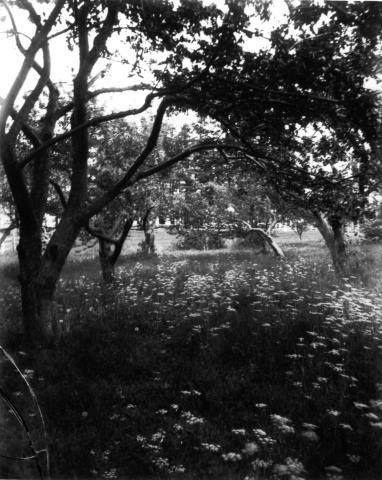
The Macneill homestead was a working farm run by men who saw no purpose in cultivating land for anything other than food production. The long walk and the waist-high clover and caraway surrounding her garden demonstrate her need to deliberately hide her garden from her grandfather and uncle.
The plants that grew in Montgomery’s cousins’ gardens and the plants that she grew in her own garden further reinforce her sense of horticultural unease. According to the descriptions in her journals and letters, her cousins’ flower beds overflowed with southernwood, mints, hollyhocks, roses, and honeysuckles, to name only a few examples. Southernwood, or “lad’s love” as Montgomery later called it in Pat of Silver Bush, has pungent, feathery stalks which remain standing even after multiple frosts (Montgomery, PSB 229). Lemon balm, catnip, and the other members of the mint family spread riotously beyond the borders of their assigned beds. Hollyhocks are one of the first plants to emerge in the early spring, although they do not bloom until mid-summer. Once in bloom, there is no missing a hollyhock as its spires rise up from the garden like ships’ masts when they reach their full bloom.
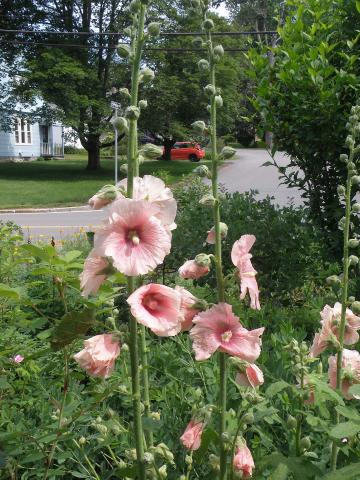
Shrub roses hold their shape into winter, while climbing and rambling roses need an arbour or an obliging tree as a support, as do honeysuckle vines. These are all plants that require a long-term commitment of both land and time from the gardener.
By contrast, Montgomery’s garden was designed to disappear, at least on the surface, at the end of the growing season. Tulips and narcissus come from bulbs that remain in the ground, but their stalks and leaves are cut back in early summer. Most of her other plants were annuals, which are easily removed on demand. Her “white and pink asters” were probably China asters which are annuals grown from seed rather than the perennial “true” asters that are native to eastern Canada (CJ 2 [28 Aug. 1901]: 21).
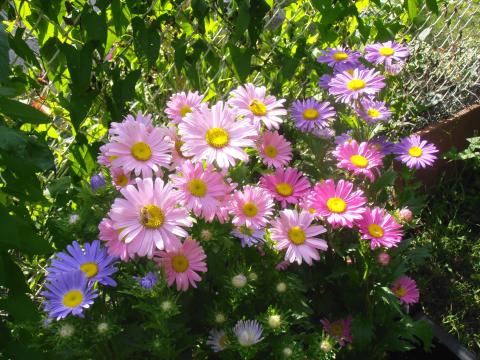
Peonies are the only perennial plant that appear in her descriptions of both her friends’ gardens and her own garden. They take years to become established, but their blooming season is relatively short, and she was probably growing an herbaceous peony whose foliage can be cut back in mid-summer. Montgomery’s carefully located garden plot and plant choices were crucial allies in her efforts to navigate her family’s expectations for her labour and land use during the first several years after Alexander Macneill’s death. She grew only those plants which could be tended at odd moments during the day or in the early evening. In turn, the greening apple trees and the sea of clover and caraway surrounding her garden offered camouflage until her plants retreated underground or were lost to frost.
In her journal entries and letters to long-term correspondents Ephraim Weber and George MacMillan, Montgomery deliberately focused on the pleasure that she took in her growing plants rather than her frustrations with the horticultural limitations placed upon her. Early in their correspondence, in response to a letter from Montgomery that has not survived, Weber told Montgomery, “No wonder you want to be there [in Cavendish] where old gardens, ancient orchards and the sea inspire you” (Montgomery, Green Gables Letters 17). Later in the same letter, he teasingly enquired whether she had “become sober yet from the lily fragrance” emanating from her garden. As Montgomery’s correspondence with MacMillan developed over the years, she often offered horticultural advice drawn from her own experiences. A 1908 letter recommended “well-rotted cow manure if you can obtain it” as a fertilizer for the Van Sion narcissus bulbs she had just sent him (Montgomery, My Dear 42).
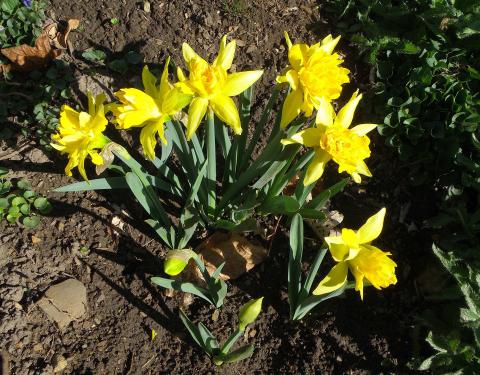
While his bulbs might not need much extra winter protection in Scotland, she had found that her narcissus fared better with a heavy layer of leaves and tree boughs laid on top of them before the first snows fell.
One of Montgomery’s letters to George MacMillan hints, however, at the strains she was experiencing as she struggled to balance her dual role as family caregiver and gardener/writer. Montgomery had originally entered her grandparents’ house at a transitional period in their lives when their adult children were marrying and moving away from the family home. With empty rooms in the house, Alexander and Lucy Macneill often invited family members such as their son Leander and his family to stay in the summer months. During these visits, Montgomery spent hours preparing various culinary delicacies for her relatives, setting tables, and heating water for clean laundry and dishes through the summer months. Mary Rubio notes that Montgomery’s grandmother “who adored Leander (her first-born son), expected Maud to wait on his family as willingly as she herself did,” but Montgomery often chafed at these expectations (Rubio 46).
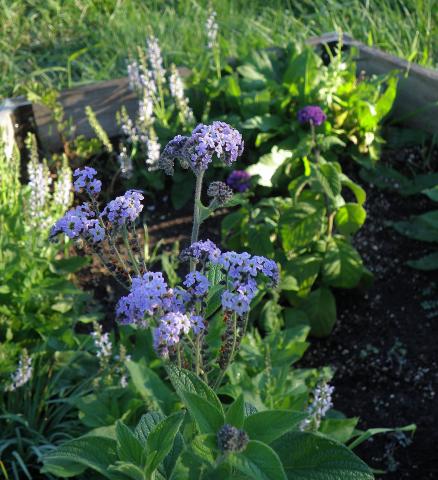
One particularly challenging day in 1904 ended with Montgomery at her desk, pen in hand, to write MacMillan. “I have been here sizzling all the afternoon making lemon pies for we have a houseful of company at present—and just getting madder all the time,” she told him (Montgomery, Letters 6 July 1904)..Desperate for an escape from the hot kitchen, she went out to water her garden, where she found her verbenas eaten by grubs which left her “just maddest.” Now in her room, she took solace in the “big jar of garden heliotrope on my table before me [which was] mellowing my temper very muchly” and a span of time in which she could tell her friend about her day.
She knew MacMillan, unlike her family, would always see her as more than a producer of lemon pies.
During the early years of Montgomery’s correspondence with MacMillan and Weber, she published dozens of short stories, many of which featured characters with gardens of their own. “The Promise of Lucy Ellen” introduces sisters Cecily and Lucy Ellen Foster, who live in a house fronted by a garden where “beds of purple and scarlet asters were making rich whorls of colour” (Doctor’s Sweetheart 58–59). In another of these stories, farmer John Harrington spends his spare time “experimenting with new bulbs in undisturbed serenity” (At the Altar 129). The arrival of a new family whose pigs routinely trample his glorious flowers sets the events of “Them Notorious Pigs” in motion.
In many of Montgomery’s stories, gardens also play a central role in bringing families together, including in “The Bride Roses” (1903). At the beginning of this story, Corona Gordon is grieving over her estrangement with her cousin, Meredith Gordon. She lives in a house with a garden where nothing “was planted quite where it should be, yet withal it was the most delightful spot imaginable” (After Many Days 18). Her most prized plant is a white rose bush brought from Scotland by her grandmother. Corona’s decision to give roses from this bush to Meredith’s daughter, for her wedding leads to a reconciliation for the Gordon family. “Her Own People” (1905) introduces schoolteacher Constance Foster who believes that she has no relations. A rural walk takes her past a farmhouse “set between a big orchard and old-fashioned flower garden with great pines at the back” (Akin to Anne 152). The house is located on Heartsease Farm, and “heartsease” is another name for pansies, a flower grown by Montgomery in her garden during the previous spring (CJ 2 [20 May 1904]: 103). The discovery of Constance’s mother’s name in a book inside the house reveals that she is the niece of Charles and Flora Bruce, the farm’s owners. The story ends with Constance planning to stay at Heartsease Farm. Like Montgomery with her grandmother, she will care for Uncle Charles and Aunt Flora as they age. Since Montgomery was tending her garden while caring for her grandmother, it also seems likely that she envisioned future hours of joyous work in the “old-fashioned flower garden” for Constance. In Montgomery’s eyes, horticultural labour was an essential part of domestic labour. Hauling manure to fertilize a garden requires as much physical labour as hauling water to clean floors, but Montgomery knew that the end result was a richly blooming flower whose blossoms could brighten a farmhouse kitchen.
Montgomery’s stories about family reunions fuelled by beautiful gardens manifest as a particular form of wish fulfillment from an author who was, once again, navigating tensions within her own family. The fragile peace that Montgomery had brokered in the summer of 1898 between her grandmother and her uncle’s family broke down during the summer of 1905. John and his son Prescott “have been using grandmother shamefully all summer,” wrote Montgomery in her journal on 1 October, “Prescott, forsooth, wants to get married and get this house to live in!” (CJ 2: 137). Such a move would have forced Montgomery and her grandmother out of their home and onto the charity of any family member willing to take them in. After more weeks of pleading from Montgomery, Macneill agreed to allow them to remain in their home, but his permission came at a high cost for Montgomery. On 15 October 1905 she wrote, “I do not expect ever to have a garden here again. I do not feel welcome even to as much soil as would suffice for—a flower plot … it is very bitter to think of giving up my garden—my one pleasure apart from books and pen” (CJ 2: 139). While she never explicitly detailed her uncle’s demands in her journal, this entry suggests that Macneill had responded to her refusal to leave the farm with her grandmother by claiming the land where her tiny flower garden was located. Unlike for Montgomery’s fictional Gordon family, there were no roses that could heal this rift between uncle and niece.
Montgomery’s longing for a garden only accelerated as the years progressed. Sarah Bilston notes that late nineteenth-century manuals intended for female audiences often depicted gardening “as less as a hobby passed from one woman to another, like (for example) cookery or dressmaking, and more as a past-time a woman [could] indulge on her own” (Bilston 4). Montgomery would have agreed, since she had found working in her garden a particularly pleasant activity during a period in her life in which she was becoming increasingly isolated, owing to her grandmother’s dwindling health and the loss of her childhood friends, who were now marrying and moving to their husbands’ communities. She had a moment of particular anguish early in 1908 when George MacMillan sent her Rosamund Marriott Watson’s The Heart of a Garden as a Christmas present. Montgomery had loved reading about Watson’s garden, where visitors were encouraged to follow paths from one garden room to the next until they reached the orchard and the “wilderness” where the air was “sweet with the strange, penetrating perfume of syringa” in the spring (59). Watson’s book was, however, also a reminder of her longing for a garden of her own. She wanted a garden where paths led from one beloved plant to the next. She dreamed of hidden corners where “climbing pink china roses” could drape “their sweet loose-leaved garlands” around a pergola (Watson 70). Instead, her best hope was for a world which might, someday, allow her to “grow all the flowers I want” (Montgomery, CJ 2 [12 Jan. 1908]: 181).
All of these elements—missing her friends, the ongoing threat to her home life, the loss of her garden—fused together when Montgomery began writing Anne of Green Gables in the summer and fall of 1905. Irene Gammel notes that “the loss of the homestead was the threat that hung over her head as she composed the second half of the novel, in which Green Gables and its potential loss are being discussed” (153). The novel ends with Anne choosing to stay at Green Gables, and Elizabeth Waterston has noted that “Montgomery’s decision to stay home and write was motivated by a situation somewhat like the one Anne finds herself in at the conclusion of the novel” (Magic Island 12). One difference between the novel and real life is that Montgomery provides Marilla and Anne with the luxury of no disagreeable male relatives, something that would not be the case for her later heroine Emily Byrd Starr. Matthew leaves Green Gables to his sister, and Anne is able to make her decision without permission from a male authority figure. So far, so good for Montgomery’s triumphant reimagining of her difficult situation. Reconciling the many lost gardens in her life in 1905 was an entirely different matter, even in fiction.
The first three Anne books are filled with gardens described in loving detail, albeit with one major exception. Major moments in Anne’s life take place in the Barry family garden; the garden at Patty’s Place; and Hester Gray’s garden. The women who live in these houses cook and sew and clean for the members of their households, but they also garden, and it is clear that their horticultural activities are deeply embedded within their domestic lives. Each of these gardens tells a particular story suited to its inhabitants and the current needs of the plot. Each one has its particular list of plants, and each has its physical geography of paths and walls, sundials or summer houses. Montgomery was determinedly building fictional gardens, but the loss of her own garden is a haunting presence in the early Anne books.
Anne meets Diana Barry for the first time in Diana's family garden. The Barry family grows a veritable roll call of Montgomery’s favourite perennial plants: “rosy bleeding-hearts and great splendid crimson peonies … pink and blue and white columbines and lilac-tinted Bouncing Bets … scarlet lightning that shot its fiery lances over prim white musk-flowers” (Montgomery, AGG 92).
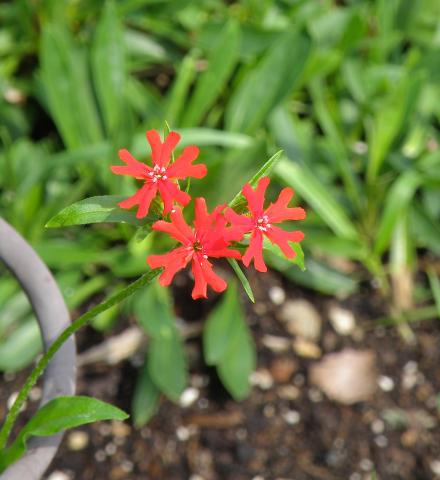
Bleeding hearts are spring-blooming herbaceous perennials whose heart-shaped red and pink blossoms gave rise to their common name. The description of “pink and blue and white” Columbine flowers suggests the Barry family was growing the European Aquilegia vulgaris rather than the indigenous A. canadensis whose blossoms are red and yellow. Bouncing Bets is another perennial which produces masses of tiny purple and pink blossoms from June to October. Scarlet lightning has sprays of flame-coloured four-petalled blossoms, while musk, or musk mallow, has funnel-shaped flowers and a faintly sweet scent. Elizabeth Waterston notes that Diana’s name “recalls the classical moon goddess, virginal and elusive: an ironic name for warm, romantic Diana” (Kindling Spirit 43). The irony is further reinforced by the many red flowers in Diana’s garden: rosy bleeding hearts, crimson peonies, scarlet lightning. Later in the book, Diana will become intoxicated by currant wine, a red-coloured drink. Anne, despite her red hair, is associated with white flowers: narcissus and the thorny Scotch roses at Green Gables. Nevertheless, Waterson sees the contrasts between Anne and Diana as evidence that they are each other’s “second selves.”
There are also, as Margaret Anne Doody has noted, striking similarities between Montgomery’s descriptions of Diana Barry’s garden and her descriptions of her cousins’ gardens in her journals and letters (Doody 436). The Barry garden, like Amanda, Alma, and Penzie Macneill’s gardens, is surrounded by a shelter break of willow and fir trees.
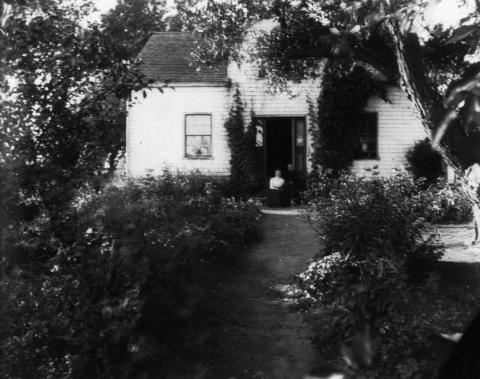
Once inside the garden, “prim, right-angled paths, neatly bordered with clamshells, intersected it like moist red ribbons” (Montgomery, AGG 92). Carolyn Strom Collins further notes that this descriptive line was not part of the original manuscript, which suggests that Montgomery continued to develop the Barry garden as she finished the novel during the following winter (Collins 111, Note Q6). Yet Diana’s garden, like Montgomery’s cousins’ gardens, is a garden for Anne to visit rather than a garden for her to live in. At the end of the day, both Montgomery and Anne must leave these gardens to return to their homes. These distinctions highlight that Diana, like Amanda, Alma, and Penzie, is part of a nuclear family, while the family that Marilla, Matthew, and Anne formed at Green Gables is far less orthodox. Montgomery will not provide Anne with a fully developed garden until she marries Gilbert, and they have begun to form a traditional family unit of husband, wife, and children at the House of Dreams.
Another, less-discussed, garden in the first three Anne books is the garden in Anne of the Island at Patty’s Place, the house that Anne and her friends rent during their final three years at Redmond College. Like so many of Montgomery’s fictional homes, Patty’s Place is a white frame house surrounded by trees. The tiny garden in front of the house is filled with “unworldly flowers and shrubs—sweet may, southern-wood, lemon verbena, alyssum, petunias, marigolds, and chrysanthemums” (AIs 53). Both sweet may and southernwood are perennials, while the other plants are all annuals. Sweet may, also known as sweet woodruff, has tiny white flowers and makes an excellent groundcover. Lemon verbena has tiny purple flowers that sway in the breeze on narrow stalks. Like sweet may, alyssum grows low to the ground and has white flowers.
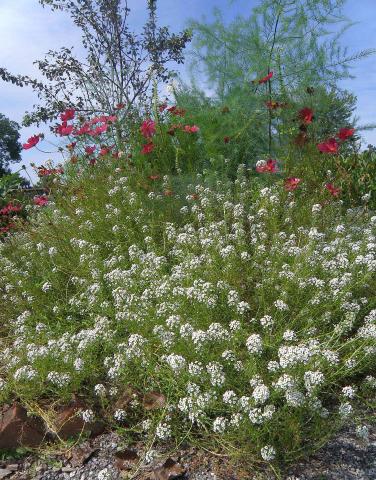
Petunias, marigolds, and chrysanthemums are more familiar to a twenty-first century audience. More so than any other Montgomery garden, this is a garden of contrasts: bright primary colours and feathery green foliage, the subtle scent of woodruff against the acrid marigold, which may be why she described it as “unworldly.” This garden provides the perfect setting for Patty’s Place, where Anne and her friends are described as having “the fun of homemaking without the bother of a husband” (AIs 129). When Anne and her friends leave, Patty’s Place will remain the home of unmarried women, the eponymous Patty Spofford and her niece Maria Spofford. Like the Barry garden, however, traditional family structures await in the other central garden featured in both Anne of Avonlea and Anne of the Island.
Anne and Diana come across Hester Gray’s garden while on a picnic when they are seventeen. Years earlier, Jordan Gray married Hester Murray, and they created a garden deep in the Avonlea woods. After Hester’s death from tuberculosis, the same disease that led to Montgomery’s mother’s death in 1875, the garden was abandoned. Like Frances Hodgson Burnett’s “secret garden,” the outlines of Hester’s garden have survived their years of neglect.6 The stone walls surrounding the garden were still intact and cherry trees ran along the eastern wall. Inside the garden, “there were traces of old paths still and a double line of rosebushes through the middle,” though we never learn their colour (Montgomery, AA 110). In spring, the garden was “lovely with narcissus and violets”; in fall, goldenrod “kindled its fairy torches in the corners and asters dotted it bluely” (AIs 265). Montgomery was clearly taken with her vision for Hester Gray’s garden, since she created a similar garden for her short story “Una of the Garden,” which was published serially in The Housekeeper in 1908–1909.7Like Hester’s garden, Una’s garden has white narcissus in spring and a double row of roses in early summer. Montgomery then expanded Una’s story into a novel that she titled Kilmeny of the Orchard in 1910. Since Una’s garden, as Montgomery acknowledged to George MacMillan, closely resembled Hester Gray’s garden, she set much of the book in an orchard like the one that grew behind her grandparents’ home (My Dear 48). Nevertheless, there is an abandoned garden in one corner of Kilmeny’s orchard which, like Hester and Una’s gardens, has paths running between garden beds “ablow with the starry spikes of June lilies” (KO 28). All four of these gardens are closely associated with marital love, whether as the setting for Hester Gray’s life following her marriage or the location for the marriage proposals between Anne and Gilbert, Una and Eric, and Kilmeny and Eric. While Hester passed away before having children, it is strongly implied that the other three couples in these stories will create their own family units over time.
There are gardens everywhere in the first three Anne books: the Barrys have their garden, Hester Gray has her garden, Patty’s Place has a garden, even cantankerous Mrs. Lynde has a garden filled with Montgomery’s favourite flower, “white narcissus—the old ‘June Lilies’ of girlhood days” (CJ 3 [15 Apr. 1914]: 153). Despite this horticultural abundance, the reader never enters a garden at Green Gables. Margaret Anne Doody theorizes that “it would be out of keeping with the novel’s motifs to have Marilla represented as a grower of flowers before Anne arrives” (Doody 436). The yard is described as “very green and neat and precise … [with] not a stray stick or stone to be seen” (AGG 4). Marilla is described as sweeping over her yard as often she swept over her house, which fits the assessment that she is a woman who cannot be bothered with something as trivial as growing flowers solely for their beauty. A second reading, however, demonstrates that there are carefully tended flowers at Green Gables throughout the novel. There is the famous apple-scented geranium in the kitchen whom Anne christens “Bonny” on her first morning at Green Gables. Montgomery’s first surviving journal entry from 1889 tells the story of acquiring her own geranium, whom she also named Bonny, as a gift from a neighbour (CJ 1 [21 Sept. 1889]: 3). The passing of the geranium slip from Maggie Abbott to Maud suggests that the geranium at Green Gables may, in turn, have been a gift to Marilla from a neighbour such as Mrs. Lynde.
During Anne’s first spring in Avonlea, Montgomery mentions madonna lilies in a garden at Green Gables. Alice Coats writes that “the Madonna lily has a strong claim to be considered both the oldest domesticated flower and the loveliest,” although it did not acquire its common name until the late nineteenth century when it was necessary to give it a name to distinguish it from other commercially available white lilies (142). Following Matthew’s death in the book’s penultimate chapter, Montgomery depicts Anne gathering the “sweet old-fashioned flowers which his mother had planted in the homestead garden” to place on his grave (AGG 318). This pattern is repeated when Anne brings Scotch roses to Matthew’s grave from a bush his and Marilla’s mother brought from Scotland to Prince Edward Island.
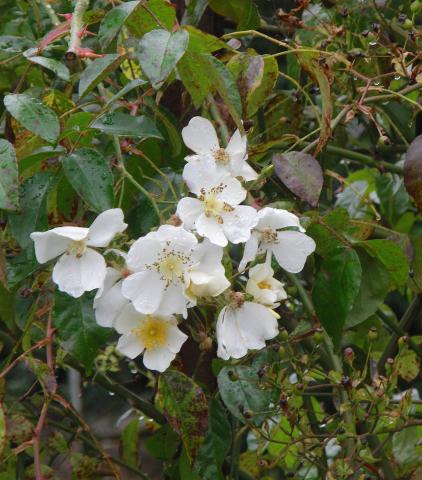
The final chapter finds Anne and Marilla sitting on the Green Gables doorstep by a row of pink and yellow hollyhocks. All of these plants clearly demonstrate that Green Gables has a perennial garden that has been loved and tended by the Cuthberts over two generations. Yet we never see more of this garden than these few tantalizing glimpses.
The year in which Montgomery wrote Anne of Green Gables was the year in which she was mourning the loss of her garden. In both Montgomery and Anne’s stories, women face challenges to their ability to remain in their homes after the deaths of male family members. Montgomery’s sense of uncertainty about her own future worked its way onto the page as she thought about a home for Anne. Even when she had access to land for a garden prior to 1905, her garden had been hidden away in the orchard. Consequently, she could not bring herself to give either Anne or Marilla the luxury of a garden in the open. Instead, the Green Gables garden remains little more than the occasional scent of “perfume that entered in on viewless winds at every door and window (AGG 105).
Three years after the successful 1908 publication of Anne of Green Gables, Montgomery’s grandmother passed away. That same year, following a five-year engagement, Montgomery married a Presbyterian minister named Ewan Macdonald and moved to his parish in Leaskdale, Ontario, that fall. She arrived too late in the growing season to plant anything in 1911, but she eagerly got to work in the spring of 1912. Montgomery’s male family relatives in Cavendish had barely tolerated her garden for years before forcing her to give it up in 1905. Now, as the mistress of her own home, she could incorporate gardening into a daily routine that also included caring for the members of her family and her husband’s parish, producing meals and clothing, and, whenever possible, writing.
Montgomery eagerly chronicled her horticultural labours in her journals and in her letters to George MacMillan and Ephraim Weber. She reported to MacMillan in June that she and Ewan Macdonald had done “a ‘streak’ of [gardening] this spring.” The land surrounding the manse was in poor shape, and they spent hours digging out weeds together, which Maud described as a “labour of love.” After the new couple finished preparing the soil, they planted their gardens: vegetables in back and “flowers and shrubs—beds of annuals, roses, irises, lilies, etc.” in the front lawn (while this is a common way for gardeners to locate their vegetable and flower beds, it seems likely that Montgomery viewed her openly displayed flower beds with an air of triumph). The end result was a garden which she proudly described as “amid the best in Leaskdale” (Letters 27 June 1912). Roses and lilies are old friends from her Cavendish gardening years, but iris may have been a new plant for her since she did not mention them in her earlier journals and letters, although it is unclear which variety of iris she planted. Once Montgomery’s plants started coming up, she went out each morning to see which new flower or vegetable had sprouted or bloomed overnight, a habit common to gardeners everywhere. Later in the fall, after the birth of the couple’s first son, Chester Cameron Macdonald, the Macdonalds planted bulbs, and, by winter, she was again dreaming of her garden under its blanket of snow. During the following spring, Montgomery told her journal that “I had to go without [a garden] for so many years and now I’m quite drunk with the joy of having one again” (CJ 3 [18 May 1913]: 99). The pleasure she took in her garden was heightened by being able to share the products of her labours with her family and community. She often worked in her flower garden in the evening, which allowed her to engage in conversation with admiring passersby, something she had never been able to do in Cavendish.
The other new routine in Montgomery’s married life was visits home to Prince Edward Island. Her 1913 trip was a joyous occasion from start to finish. The Island was as beautiful as ever, and she revelled in having an adorable young son to introduce to her family and friends. Late August, however, meant that it was time to pack her belongings for the long journey back to Ontario. She dreaded returning to Leaskdale, where “the air seemed dull and languid after the tang of gulf breezes.” And yet, on arriving at the manse, she found that “I was suddenly glad to be back—to be home! Glad to see again my garden … glad to see my flowers” (CJ 3 [6 Aug. 1913]: 128). Montgomery’s ecstatic joy marked a turning point in her life. She would miss Prince Edward Island for the rest of her life, but now she had the joy of a garden of her own, which, in turn, allowed her to feel at home in Leaskdale.
These experiences made it possible for Montgomery to finally begin linking her fictional heroines with their own gardens. The first of these books was Anne’s House of Dreams, which depicts the early years of Anne and Gilbert’s marriage. Unlike Montgomery’s decorous wedding to Ewan Macdonald in the parlor of the Campbell home in Park Corner, Anne and Gilbert are married in the Green Gables orchard. Before the wedding, Davy and Dora Keith, the orphaned twins whom Marilla adopted in Anne of Avonlea, “whisk [Diana’s children] off to the garden” (AHD 27). This sentence functions as an afterthought in the chapter, but it marks an important turning point that Montgomery would later revisit in Anne of Windy Poplars. This is the first time that she ever depicts characters in an Anne book entering the garden at Green Gables. The layout of the garden remains a mystery, as do many of the plants that grow in it, but the residents of Green Gables are finally enjoying their garden.
Following their wedding, Anne and Gilbert leave for their new home in the fictional community of Four Winds Harbor, which Montgomery modelled on New London Harbour. Like the homes of Montgomery’s cousins, their house is located in the centre of a “very delightful garden” (Montgomery, AHD 14). There are trees everywhere: Lombardy poplars along the drive, a fir wood behind the house, and birches circling the back part of the garden where a brook cuts across one corner. Similar to Hester Gray’s garden, this garden has a double row of rose bushes, which were planted for Persis Leigh Selwyn, the first woman to live in the house several decades before. The lingering presence of these roses in both Hester’s and Persis’s gardens long after they were initially planted speaks to the enduring presence of perennial plants in Montgomery’s writings, long after the annuals have flared out. They also serve to connect Anne with the first woman who gardened at the House of Dreams, since Anne will now care for Persis’s flowers. After their guests have gone home, Anne and Gilbert walk about the garden in the dark, where they find still more flowers planted by Persis, which have “flung their sweetness on the shadowy air … Anne paused in the gloom to gather a spray. ‘I love to smell flowers in the dark,’ she said” (AHD 56). Similar to the long-ago perennials that Matthew and Marilla’s mother planted in the Green Gables garden, these flowers are not identified, but this description offers some possibilities. The spray that Anne gathers suggests a “Mrs. Sinkins’ dianthus,” an heirloom variety with “pure white double flowers that are prettily fringed at the edges and give out a particularly strong, rich scent” (Leendertz 86).
Unlike with the garden at Green Gables, Montgomery provides the reader with detailed descriptions of the layout for the House of Dreams garden. The double row of roses appears to be in the centre of the garden. In early summer, the brook in the garden’s corner is edged with “blue eyed grasses,” a short-stemmed member of the iris family with tiny blue or yellow flowers.
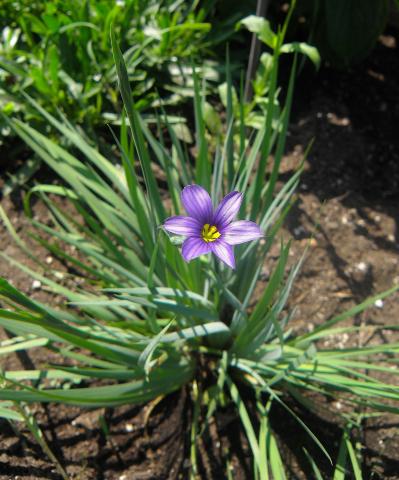
Their blossoms are eventually replaced with pale yellow poppies. Another section of the garden has a “great bed of daffodils,” which “gleam through the pale, silvery twilight like golden stars” (AHD 258). The front gate is flanked by lilies who “hold up their imperial cups to be filled with the molten gold of August sunshine,” a description suggesting orange day lilies (AHD 290). Four Winds lighthouse keeper Captain Jim Boyd brings Anne quahog shells to place along the garden paths and beds, just as he brought them for Persis Selwyn decades earlier. While all of the plants that Montgomery depicts her characters growing came from Europe rather than being indigenous to the Americas, these shells root Anne’s garden in their maritime landscape. In 1917, the same year in which Anne’s House of Dreams was published, Montgomery also published a short story titled “Abel and His Great Adventure,” whose titular character closely resembles Captain Jim. Abel has a garden of his own to tend that resembles the House of Dreams garden with its surrounding trees and beds of “roses and lilies and hollyhocks” (Doctor’s Sweetheart 134). Captain Jim does not have a garden in Anne’s House of Dreams but it is apparent throughout the text that he is an enthusiastic contributor to Persis and Anne’s garden.
As the book progresses, the reader sees Anne planting seeds in spring, tending flowers through the summer and fall, and growing geraniums on her windowsills in the winter months. She tells Captain Jim, “I love my garden and I love working in it. To potter with green, growing things, watching each day to see the dear new sprouts come up, is like taking a hand in creation” (AHD 151). This line is all but identical to a 20 May 1904 entry in Montgomery’s journal in which she observed, “I’ve been gardening a bit and nobody can do that and be morbid. To potter with green growing things watching each day to see the dear new sprouts come up, is to take a hand in creation” (CJ 2: 100). Anne, like Montgomery, can now openly garden in her own space, a point the author would later develop in Anne of Ingleside (1939), which is one of the most garden-focused of her novels. Furthermore, these activities are embedded within the communities around Montgomery and Anne. Montgomery gardened while conversing with friends and neighbours, while Anne is depicted as gardening alongside Captain Jim, Leslie Moore, and her housekeeper, Susan Baker. The solitary gardener of the early journals and Anne books has been replaced by a new figure who is integrated with her world in ways that the young Montgomery had only been able to dream about.
There is also another horticultural difference between the first three Anne books and Anne’s House of Dreams. Major plot points take place in a garden throughout House of Dreams. Marilla comes to stay with Anne and Gilbert when Anne nears the end of her first pregnancy. As Anne’s labour drags on, a terrified Marilla paces “the garden walks between the quahog shells” (AHD 160). A few months later, Anne and neighbour Leslie Moore’s friendship reaches a turning point in the garden while the brook “sparkled and crooned past them; the birches threw dappled shadows over them; [pink, white, and red] roses bloomed along the walks” (AHD 170). Later in the book, Leslie tells Owen Ford, Persis Selwyn’s grandson, that while Anne likes the pink roses and Gilbert prefers the white roses, her favourite are the crimson roses that “satisfy some craving in me as no other flower does” (AHD 297). When Owen and Leslie become engaged, he crowns “her shining hair with the red, red rose of a love triumphant” (AHD 298). The difference is that these plot turns are now happening in Anne’s garden rather than the gardens of her friends. Montgomery, like her most famous heroine, is now at home in her own garden.
Examining Montgomery’s fictional gardens in context with her own highlights the many ways in which Montgomery saw gardens as an essential component in women’s domestic lives. There are fully realized gardens throughout the first three Anne books, but all of them, like the gardens Montgomery described visiting in her journals, belong to other people. Her joyous, sudden recognition in the summer of 1913 that she was home in her Leaskdale garden had a profound impact on her future books as each new heroine has a garden of her own where she can work with the approval and assent of her broader community. Montgomery and her heroines continue to face multiple challenges in their lives, but their gardens remain a constant source of solace and pleasure that can be relied upon to sustain them through the domestic expectations and limitations placed on their lives.
About the Author
Abby Chandler is Associate Professor of Early American History at the University of Massachusetts Lowell. She is also a gardener who is working on a book that considers Montgomery’s writings about gardens in context with the Cottage Garden and Arts and Crafts movements of the late nineteenth and early twentieth centuries. She is a co-editor for the Journal of L.M. Montgomery Studies “Maud 150: Back-to-the-Future” essay collection.
Acknowledgements
I would like to express my sincere appreciation to the editorial and administrative teams at the Journal of L.M. Montgomery Studies who shepherded this paper through its various stages, with particular thanks to Holly and Caroline. Thank you as well to the editorial peer reviewers whose guidance and suggestions made this a stronger paper and to the gardeners at the Stevens-Coolidge House and Garden whose horticultural insights contributed to the writing of this paper.
Permissions
L.M. Montgomery photographs “Back orchard of old home, ca. 1890s” and “View of Alma MacNeill’s home.” Digital images courtesy of Archival and Special Collections, University of Guelph. L.M. Montgomery Collection, XZ1 MS A097002 and XZ1 MS A097012. Please contact University of Guelph Library (libaspc@uoguelph.ca) regarding any planned print or electronic republication of this image.
Banner image
Author photograph of scarlet lightning (Lychnis chalcedonica).
- 1 Garden historian Ambra Edwards notes that “whereas the allusive gardens of the eighteenth century excluded women denied a classical education, once the garden was understood as essentially decorative, women could claim it as part of the domestic sphere” (Edwards, The Story 171). Also see Bilston, “Queens of the Garden” 14.
- 2 Mary Rubio notes that, by contrast, Alexander Macneill’s father’s will had been “a model in its protection of the widow’s ownership rights and other powers” (Lucy Maud 106).
- 3 See Mary Beth Cavert, “L.M. Montgomery’s Letters to Scotland: Reading Between the Lines,” in the L.M. Montgomery and Reading Collection, edited by Emily Woster and Kate Scarth, Journal of L.M. Montgomery Studies, journaloflmmontgomerystudies.ca/reading/cavert/lm-montgomerys-letters-scotland.
- 4 See Buchan, The English Garden 61–73 and Edwards 214–17. Montgomery’s dislike for annual plants from tropical climates takes on a particularly vindictive form in Anne of Ingleside when Anne inwardly mocks the calceolarias grown by her housekeeper, Susan Baker (AIn 14).
- 5 See Robinson, The Wild Garden; Jekyll, Wood and Garden; and Von Armin, Elizabeth and Her German Garden.
- 6 Anne of Avonlea was published in 1909 and The Secret Garden was first published serially during the following year. See McDowell, Unearthing the Secret 10.
- 7 See “Una of the Garden.”
Works Cited
Bilston, Sarah. “Queens of the Garden: Victorian Women Gardeners and the Rise of the Gardening Advice Text.” Victorian Literature and Culture, vol. 64, no. 1, 2008, pp. 1–19.
Boyd, Shelley. Garden Plots: Canadian Women Writers and their Literary Gardens. McGill-Queens UP, 2013.
Buchan, The English Garden. Frances Lincoln, 2017.
Coats, Alice M. Flowers and Their Histories. Curwen Press, 1956.
Collins, Carolyn Strom. Anne of Green Gables: The Original Manuscript. Nimbus, 2019.
Doody, Mary Anne. “Gardens and Plants.” L.M. Montgomery, The Annotated Anne of Green Gables, edited by Wendy E. Barry, Margaret Anne Doody, and Mary E. Doody Jones. Oxford UP, 1997, pp. 434–437.
Edwards, Ambra. The Story of the English Garden. Pavilion Books, 2018.
Gammel, Irene. Looking for Anne of Green Gables: The Story of L.M. Montgomery and Her
Literary Classic. St. Martin’s Press, 2008.
Jekyll, Gertrude. Wood and Garden. Ayer, 1983.
Leendertz, Lia. Twilight Garden: A Guide to Enjoying Your Garden in the Evening Hours. Ball Publishing, 2011.
Martin, Carol. A History of Canadian Gardening. McArthur and Company, 2000.
McDowell, Marta. Unearthing the Secret Garden: The Plants and Places That Inspired Frances Hodgson Burnett. Timber Press, 2021.
Montgomery, L.M. “Abel and His Great Adventure.” The Doctor’s Sweetheart and Other Stories, edited by Catherine McLay, Bantam Books, 1995, pp. 124–39.
---. The Alpine Path: The Story of My Career. Nimbus, 2005.
---. Anne of Avonlea. 1909. Sourcebooks Fire, 2014.
---. Anne of Green Gables. 1908. Sourcebooks Fire, 2014.
---. Anne of Ingleside. 1939. Sourcebooks Fire, 2014.
---. Anne of the Island. 1915. Sourcebooks Fire, 2014.
---. Anne’s House of Dreams. 1917. Sourcebooks Fire, 2014.
---. Kilmeny of the Orchard. 1910. Bantam Books, 1989.
---. “The Bride Roses.” After Many Days: Tales of Time Passed, edited by Rea Wilmshurst, Bantam Books, 1992, pp. 13–25.
---. The Complete Journals of L.M. Montgomery: The PEI Years, 1889–1900. [CJ 1]. Edited by Mary Henley Rubio and Elizabeth Hillman Waterston, Oxford UP, 2012.
---. The Complete Journals of L.M. Montgomery: The PEI Years, 1901–1911. [CJ 2]. Edited by Mary Henley Rubio and Elizabeth Hillman Waterston, Oxford UP, 2017.
---. The Green Gables Letters: from L.M. Montgomery to Ephraim Weber, 1905–1909. Edited by Wilfred Eggleston, Borealis Press, 2001.
---. “Her Own People.” Akin to Anne: Other Tales by the Author of Anne of Green Gables, edited by Rea Wilmshurst, Bantam Books, 1990, pp. 148–56.
---. Letters to George Boyd MacMillan. 1903–1941. George Boyd MacMillan Fonds. Canadiana Héritage, Canadian Research Knowledge Network, Library and Archives Canada, 2020. C-10869, C-10890. heritage.canadiana.ca.
---. L.M. Montgomery’s Complete Journals: The Ontario Years, 1911–1917. [CJ 3]. Edited by Jen Rubio, Rock’s Mills Press, 2016.
---. My Dear Mr. M: Letters to G.B. MacMillan. Edited by Francis W.P. Bolger and Elizabeth R. Epperly, McGraw-Hill Ryerson, 1980.
---. Pat of Silver Bush. 1933. Sourcebooks Fire, 2014.
---. “Una of the Garden.” The Housekeeper, vol. 64, no. 1, 2008, p. 18.
Robinson, William. The Wild Garden. Timber Press, 2009.
Rubio, Mary Henley. Lucy Maud Montgomery: The Gift of Wings. Anchor, 2010.
Von Armin, Elizabeth. Elizabeth and Her German Garden. Benediction Classics, 2014.
Waterson, Elizabeth. Kindling Spirit: L.M. Montgomery’s Anne of Green Gables. ECW Press, 1993.
---. Magic Island: The Fictions of L.M. Montgomery. Oxford UP, 2008.
Watson, Rosamund Marriott. The Heart of a Garden. De La More Press, 1907.
Article Info
 Copyright: Abby B. Chandler, 2026. This work is licensed under a Creative Commons Attribution 4.0 International License (Creative Commons BY 4.0), which allows the user to share, copy, and redistribute the material in any medium or format and adapt, remix, transform, and build upon the material for any purpose, even commercially, PROVIDED the Licensor is given attribution in accordance with the terms and conditions of the CC BY 4.0.